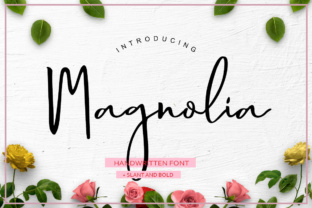
Magnolia Hand Font for Digital Branding
In the competitive landscape of web design and digital product creation, typography is often the deciding factor between a generic template and a memorable brand experience. As designers, we constantly search for typefaces that bridge the gap between aesthetic appeal and functional usability. Magnolia Hand emerges as a compelling solution within the Script Amp category, offering a sweet calligraphy style that feels both casual and dynamic. Unlike rigid script fonts that can feel outdated or overly formal, Magnolia Hand features a dancing baseline that injects organic movement into digital layouts. For web designers and UI creators, this characteristic is invaluable for establishing a human connection in an increasingly automated digital environment.
Visual Personality and Digital Hierarchy
The primary strength of Magnolia Hand lies in its ability to soften the hard edges of modern web interfaces without sacrificing professionalism. The font’s casual nature makes it exceptionally well-suited for brands that want to project warmth, approachability, and creativity. When implementing this typeface in a visual hierarchy, it functions best as a display element rather than body copy. The dancing baseline creates a natural rhythm that guides the user's eye across hero sections and landing page headers. This movement mimics the natural flow of handwriting, which psychologically signals authenticity to users scanning a website.
For digital products and app screens, Magnolia Hand serves as an excellent tool for emotional anchoring. While your interface elements, navigation bars, and data tables require strict geometric sans serif fonts for clarity, Magnolia Hand can be deployed strategically to highlight key value propositions or welcome messages. This contrast establishes a clear distinction between functional UI elements and brand voice content. By reserving this handwritten font for moments of high emotional impact, you preserve its novelty and prevent visual fatigue, ensuring that the design remains readable and effective across all device sizes.
Strategic Applications in Web Layouts
Integrating Magnolia Hand into conversion-focused layouts requires a thoughtful approach to placement. In e-commerce environments, particularly boutique online stores or artisanal marketplaces, this font excels in promotional banners and sale announcements. The organic texture of the letterforms contrasts beautifully with clean product photography, drawing attention to special offers without appearing aggressive. For coaching websites and personal brands, using Magnolia Hand in testimonial pull quotes or signature sign-offs adds a layer of personal endorsement that standard serif or sans serif fonts cannot replicate.
When designing course sales pages or educational platforms, readability is paramount. Magnolia Hand should be utilized for section dividers, module titles, or inspirational subheads rather than dense instructional text. This application breaks up long-form content, making the learning journey feel less daunting and more conversational. Similarly, in portfolio sites for creative professionals, the font acts as a meta-commentary on the designer’s own attention to detail and appreciation for craft. It signals to potential clients that the creator understands nuance and artistic expression.
- Hero Sections: Use for main headlines to establish immediate brand tone and capture attention above the fold.
- Call-to-Action Accents: Apply to secondary button text or supporting labels near primary CTAs to add urgency through personality.
- Blog Graphics: Ideal for featured image overlays and category tags to maintain consistent branding across content marketing.
- Digital Ads: Effective in social media graphics where stopping the scroll requires distinct, human-centric typography.
- Email Headers: Enhances newsletter open rates by reinforcing brand recognition in crowded inboxes.
Optimizing Readability Across Devices
A common pitfall when using script fonts in web design is neglecting mobile responsiveness. Magnolia Hand’s dynamic baseline requires careful testing on smaller screens. On desktop displays, the intricate details of the calligraphy are easily appreciated, but on mobile devices, these details can become muddy if sized incorrectly. As a general rule for responsive design, increase the font size and line height for Magnolia Hand on mobile viewports compared to your desktop settings. This compensates for the reduced pixel density and ensures the dancing baseline does not collide with adjacent lines of text.
Contrast is another critical factor for digital accessibility. When placing Magnolia Hand over images or colored backgrounds, ensure there is sufficient luminance contrast to meet WCAG standards. Because handwritten fonts have varying stroke widths, thin sections of the letterforms may disappear against busy backgrounds. Applying a subtle text shadow or a semi-transparent overlay behind the text can preserve legibility without compromising the aesthetic. For dark mode implementations, verify that the font weight renders clearly; sometimes, light-colored script fonts on dark backgrounds require a slightly heavier weight or increased tracking to maintain their structural integrity.
Effective Font Pairing Strategies
To maximize the impact of Magnolia Hand, it must be paired with complementary typefaces that ground the design. The most reliable pairing strategy involves combining this decorative display font with a neutral, highly readable sans serif font for body copy. Fonts like Inter, Roboto, or Open Sans provide the necessary stability that allows Magnolia Hand to shine as the star performer. The geometric simplicity of a modern sans serif creates a tension with the organic curves of the script, resulting in a balanced and sophisticated editorial design.
Alternatively, for brands seeking a more traditional or literary aesthetic, pairing Magnolia Hand with a classic serif font can evoke a sense of heritage and elegance. This combination works particularly well for wedding stationery websites, luxury packaging design portals, or high-end lifestyle blogs. The key to successful font pairing is limiting the number of type families used on a single page. Let Magnolia Hand handle the expressive headers while your secondary font manages the information architecture. This restraint prevents the design from becoming chaotic and ensures that the user experience remains intuitive and focused on conversion.
Technical Considerations and Licensing
Before deploying Magnolia Hand in a live production environment, web designers must verify the technical specifications and licensing terms. Check whether the download includes webfont formats such as WOFF2, which are essential for fast loading times and cross-browser compatibility. Additionally, explore the included alternates and ligatures. Many premium script fonts offer contextual alternates that automatically adjust letter connections based on positioning, significantly improving the natural flow of the text. Utilizing OpenType features can elevate the typography from looking like a computer-generated font to genuine hand-lettering.
Licensing is a non-negotiable aspect of professional web design. Ensure that your license covers all intended use cases, including commercial websites, client projects, digital templates, and embedded app usage. Standard desktop licenses often do not include web embedding rights, so acquiring the appropriate webfont license is crucial for legal compliance. Furthermore, if you are creating digital products or templates for resale, verify that the license permits redistribution or requires an extended commercial license. Respecting intellectual property rights not only protects your business but also supports the type designers who create these valuable assets.
Ultimately, Magnolia Hand represents a versatile tool in the modern web designer’s arsenal. Its sweet calligraphy style and dancing baseline offer a unique opportunity to infuse digital spaces with personality and warmth. By applying principles of visual hierarchy, optimizing for mobile readability, and adhering to strategic font pairing, designers can leverage this typeface to build stronger brand identities and more engaging user experiences. Whether used for a boutique e-commerce store, a creative portfolio, or a SaaS landing page, Magnolia Hand proves that functional web design and artistic expression can coexist harmoniously.